
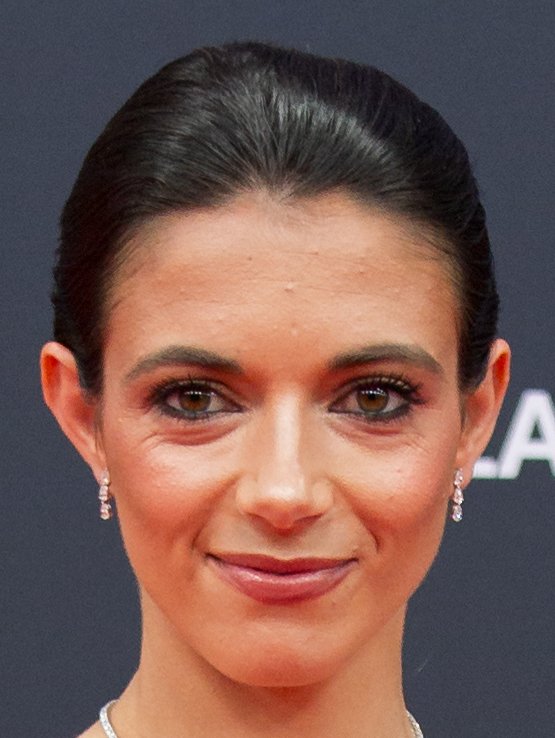
When Aitana Bonmatí received her third consecutive Women’s Ballon d’Or on 22 September 2025, the award recognised another exceptional season. It also offered a way to trace how the Barcelona and Spain midfielder had become central to two successful teams without reducing her contribution to goals or assists alone.
From a World Cup to a first Ballon d’Or
Bonmatí’s breakthrough year at the very top of international football was 2023. Barcelona won the UEFA Women’s Champions League, overturning a two-goal half-time deficit to defeat Wolfsburg 3-2 in the final in Eindhoven. Bonmatí had five goals and eight assists in that European campaign, according to UEFA, and was named the competition’s Player of the Season.
Later that summer, Spain won the FIFA Women’s World Cup for the first time. Bonmatí was awarded the tournament’s Golden Ball as its outstanding player. Her role was not limited to one final or a single highlight. Spain relied on her ability to receive possession under pressure, connect midfield with attack and maintain the tempo when matches became congested.
She won the 2023 Women’s Ballon d’Or, then The Best FIFA Women’s Player award in January 2024. The sequence reflected achievement at both club and international level.
Why the 2024 award was different
Barcelona’s 2023/24 season provided a second kind of evidence. The club won the Spanish league, Copa de la Reina, Spanish Super Cup and UEFA Women’s Champions League. In the European final against Lyon in Bilbao, Bonmatí scored the opening goal in a 2-0 victory.
UEFA credited her with six goals and six assists in the Champions League that season. She was named Player of the Match in the final and Player of the Season for the competition. Her second consecutive Women’s Ballon d’Or followed in October 2024.
The numbers were strong, but the most revealing detail is how often her influence appeared in different phases of play. Bonmatí could accelerate a passing move with a first touch, carry the ball through a narrow space or arrive in the penalty area at the right moment. A midfielder’s impact is sometimes easier to see in the structure of a team than in a box score.
A third award without a European title
The 2024/25 campaign did not end with another Champions League trophy. Arsenal beat Barcelona 1-0 in the final. Yet Bonmatí was named UEFA Women’s Champions League Player of the Season for the third year in succession. Barcelona won the domestic treble, and Spain reached the UEFA Women’s EURO 2025 final, where England prevailed.
Bonmatí’s extra-time goal against Germany had taken Spain through the European Championship semi-final. UEFA also named her Player of the Tournament. When the 2025 Women’s Ballon d’Or was awarded, she became a three-time consecutive winner despite the two major final defeats.
That distinction matters. The award was not a simple reflection of whichever team lifted the most prominent trophy. It recognised a player whose performances remained influential across a long season and several competitions.
What sustained excellence looks like in midfield
Bonmatí’s three awards span different kinds of success: a first World Cup for Spain, a dominant club campaign and a season in which individual recognition survived painful defeats. Across those years, her technical strengths remained recognisable even as the teams around her and the demands of each competition changed.
The value of a midfielder is rarely captured by a single spectacular statistic. For Bonmatí, the more persuasive measure is the consistency with which her teams have trusted her to shape the game, whether they were protecting possession, searching for an opening or chasing a result.
Photo: Barcex, Wikimedia Commons, CC BY-SA 4.0. Existing Commons face crop from the 2024 Laureus World Sports Awards; not a photograph of the Ballon d’Or ceremony. ETERVOXIA made no further crop.
